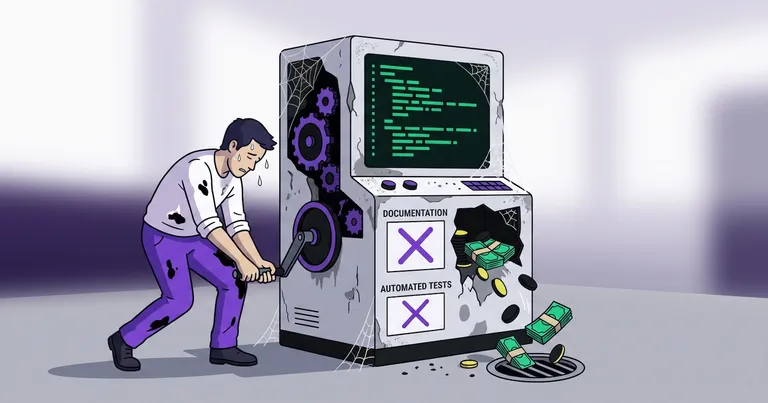

Your agency just closed a project that requires a robust web system, or a mobile app, and your in-house team doesn't have that technical capacity. The client already signed. The deadline is already set. Now someone has to write the code.
At that point, every agency without its own technical arm faces the same decision: hire (recruit, onboard, manage a development team) or outsource. The first option eats up time and capital most agencies can't spare. The second, when properly structured, is what we call white-label development.
What white-label development actually means
White label is an outsourcing model where a technical company builds the product, while the partner agency or consultancy is the one that sells, manages, and owns the relationship with the end client. The technical work happens behind the scenes, under the partner's brand.
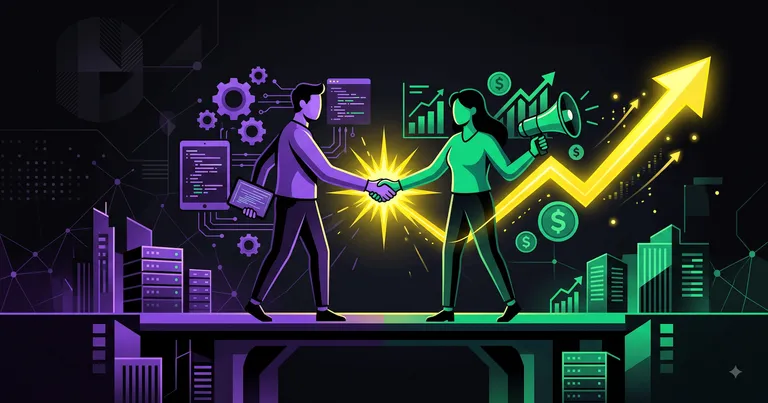
In practice, that means your agency remains the only party the end client sees as responsible for the project. Appventura steps in as the development team behind the delivery: writing the code, architecting the system, testing, deploying, and maintaining it. You're the one who shows up, negotiates, and gets the credit.
This isn't informal, unpredictable outsourcing. It's a structured operation, with scope, timeline, and responsibilities defined from day one.
What changes in your agency's day-to-day
Without an in-house technical team, every new development project becomes a capacity problem. With a white-label partner, the math changes:
- You don't recruit. No job postings, no interviews, no evaluating technical portfolios. Delivery capacity already exists, ready to be activated.
- You don't manage a technical team. No dealing with time off, turnover, or the learning curve of someone who just joined. That's our operation, not yours.
- You don't carry the technical risk alone. Architecture, security, and scalability decisions stay with people who live this work every day.
- You scale without bloating fixed overhead. Close more projects without growing payroll proportionally. The practical result: your agency focuses on what only it can do (relationships, strategy, sales) and delegates what demands constant technical depth.
How it works in practice: SLA, cadence, and rituals
A good white-label partner doesn't just deliver code. It delivers predictability. That comes down to three elements:
SLA (service level). Response times, priority handling, and quality criteria agreed upon before the project starts, not discovered halfway through.
Cadence. Regular delivery cycles, with visibility into what's in progress and what's next. No weeks of silence followed by a surprise handoff.
Rituals. Defined check-in points (weekly, biweekly, whatever the contract calls for) to adjust priorities, review deliverables, and resolve blockers quickly.
These three elements exist so the operation stays discreet, but never opaque. You know exactly what's being built, when, and why, even without managing the team directly.
One important detail: communication with the end client is optional. Some agencies prefer the technical partner to stay entirely invisible; others choose to bring the partner into occasional meetings, under the agency's brand. The model adapts to how you already relate to your clients, not the other way around.
When this model makes sense
White label tends to be the right choice when your agency:
- sells technology projects (websites, systems, apps) but doesn't have, or doesn't want to maintain, an in-house technical team;
- needs predictable capacity so it stops turning down proposals for lack of available bandwidth;
- values a partner who takes on the technical commitment as seriously as you take on the commercial one. If any of that sounds like your situation, it's worth understanding how this format fits into your operation.
Keep exploring
White label is one of the ways Appventura works as a technical partner to agencies and consultancies. See how we structure scope, allocation, and contracts on the Engagement Models page, and find out which format fits how your agency already operates.