

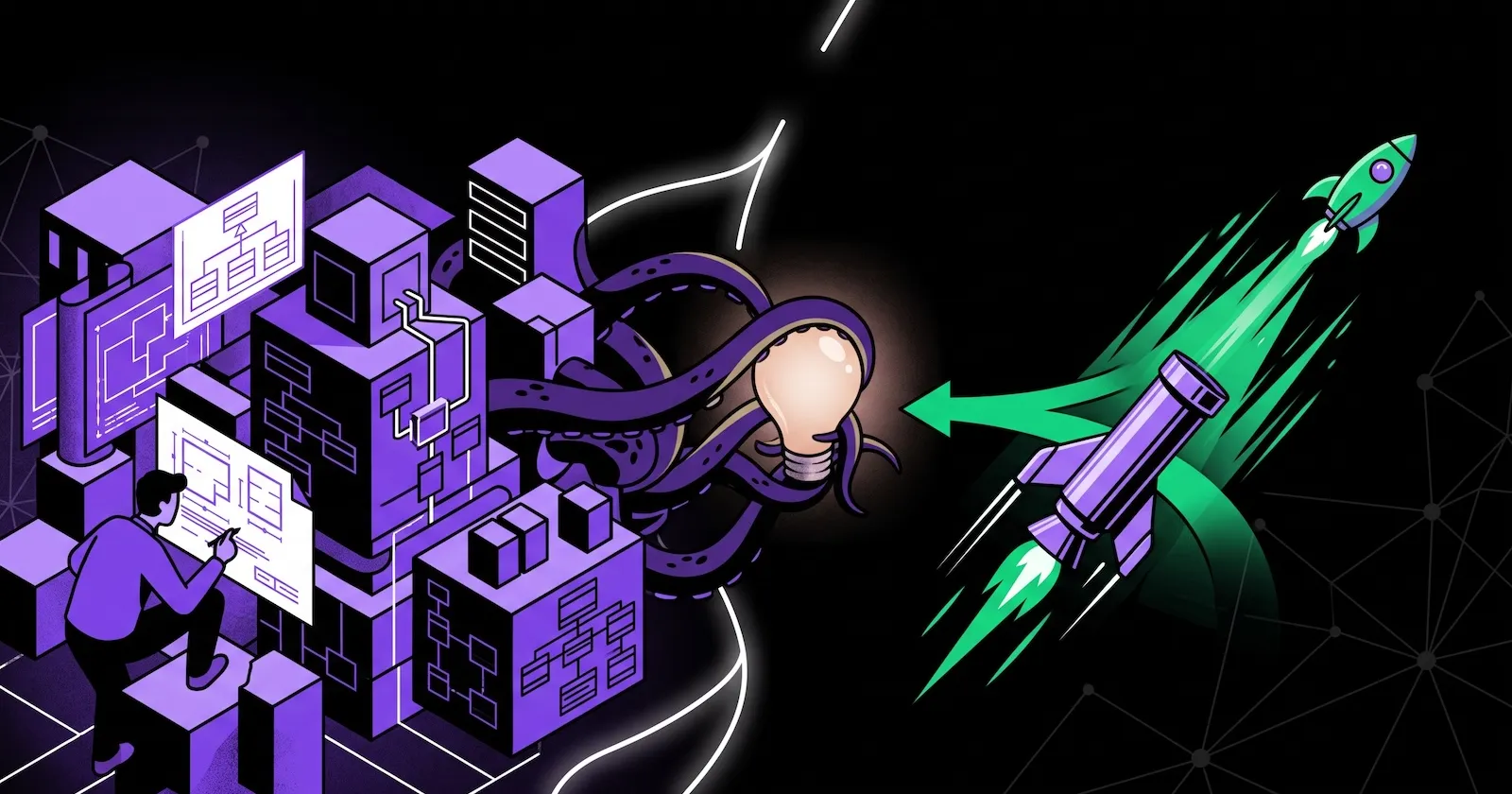
The MVP Dilemma: Perfectionism as a Technical Debt
In the competitive landscape of SaaS startups, the tension between 'Architecture-First' and 'Deliver-First' is a constant battleground. Engineering leaders are often caught between the desire to build a bulletproof, DDD-compliant (Domain-Driven Design) system and the visceral need to push code to production to capture market share. When you prioritize architecture too early, you risk falling into the trap of overengineering—a state where the complexity of your code outpaces the actual value your product delivers to users.
Overengineering isn't just about 'clean code'; it is the act of designing for problems you don't have yet. It’s building modular interfaces for modules that don't exist and abstracting databases that currently hold only five rows of data. This architectural paralysis often kills an MVP before it even reaches the market, turning what should have been a three-month sprint into a year-long infrastructure project.
Understanding the Cost of Architecture-First
Architecture-First approaches, such as implementing a rigorous Hexagonal Architecture or a complex microservices mesh from day one, often stem from a place of technical nobility. Engineers want to avoid technical debt, ensure future scalability, and make the system testable. However, in the early days of a startup, the greatest technical debt is not having a product that users want.
When you enforce strict Clean Architecture constraints, such as decoupling every service via message brokers or complex dependency injection frameworks, you increase the cognitive load for your team. You aren't just writing features; you are managing a labyrinth of abstractions. For a team of three or four developers, this overhead is stifling. The time spent navigating the architectural structure is time stolen from user testing, feedback cycles, and iteration.
The Case for Deliver-First: The Reality of Validation
Deliver-First is not synonymous with 'spaghetti code.' Rather, it is a philosophy of disciplined pragmatism. The goal of an MVP is to learn. Every hour spent perfecting the internal architecture of a feature that might be scrapped in a month is an opportunity cost. If the business fails to find product-market fit, your pristine, DDD-compliant repository becomes nothing more than a high-quality historical archive.
In a Deliver-First scenario, the focus shifts to 'Vertical Slicing.' Instead of building the entire foundation of the house, you build a room—a functional, end-to-end slice of value that works. You can absolutely use Clean Architecture principles here, but you apply them with a 'YAGNI' (You Ain't Gonna Need It) filter. You implement enough structure to keep the code maintainable, but you stop short of enterprise-grade complexity.
Finding the Sweet Spot: The Incremental Architecture Approach
So, how do we bridge this gap? The answer lies in evolutionary architecture. You should design your system with the intent of being clean, but without the burden of being perfect. Think of architecture as a living document that grows alongside the product.
1. Start with Domain Boundaries, Not Infrastructure
Even if you aren't implementing a full DDD approach, you can benefit from the core concept of bounded contexts. Organize your code by feature or business domain rather than by technical layer (controllers, services, repositories). This makes it significantly easier to refactor or pull apart logic later when your system actually needs to scale.
2. Defer Technical Decisions
Many overengineering traps involve premature choices about technology. Do you need a distributed event-driven architecture with Kafka? Probably not today. Can you start with a monolith that is cleanly separated into modules? Yes. Deferring these decisions until you have real traffic allows you to make an informed choice based on actual performance bottlenecks rather than theoretical concerns.
3. Embrace 'Refactorable' Debt
If you find yourself choosing between building a feature and building an abstraction, choose the feature. However, ensure that your code is readable enough that it can be refactored when the time comes. Write automated tests for your business logic—not for the boilerplate—to ensure that when you eventually decide to migrate to a more robust architectural pattern, you have the safety net to do so without breaking the product.
When to Pivot to Architecture-First
There comes a time when Deliver-First can become a liability. When your MVP gains traction, the 'quick and dirty' approach will begin to manifest as real technical debt that slows down feature delivery. This is your signal to pivot.
Watch for these three signs that it is time to invest more in your architecture:
- Regression loops: You spend more time fixing bugs in old features than building new ones.
- Onboarding friction: It takes new developers weeks to understand how to make a simple change because of the code’s fragility.
- Performance walls: The system starts to buckle under load, and the current architecture prevents you from scaling individual bottlenecks.
At this stage, you aren't overengineering; you are maturing. Your previous Deliver-First mindset gave you the luxury of knowing exactly where you need the most structural integrity.
Final Takeaways for Engineering Leaders
The goal of a SaaS MVP is not to showcase the most elegant system design; it is to deliver value to the user as quickly and reliably as possible. Architecture should be viewed as a tool to facilitate speed, not as a gatekeeper that hinders it.
By focusing on domain boundaries, keeping infrastructure simple, and deferring non-essential technical complexities, you can avoid the trap of overengineering. Build what you need to survive today, but keep your code clean enough to survive the refactoring required for tomorrow. Remember: a messy, successful product can always be refactored, but a perfect, unused product is simply a failure.