
Artificial intelligence has dominated recent business conversations, yet most implementations fail for a simple reason: using the wrong tool for the wrong problem. When companies try to force a generic Large Language Model (LLM) to answer questions about proprietary internal data, the result is usually inaccurate responses or complete hallucinations.
The solution to this isn't magic. It is software architecture. The name of this architecture is RAG (Retrieval-Augmented Generation).
What is RAG in simple terms?
Think of an LLM (like ChatGPT) as a brilliant professional who is locked in a room without internet access. If you ask a general knowledge question, they answer based on everything they studied before entering the room. However, if you ask about your company’s financial report from yesterday, they won't know the answer—and they might try to make something up just to avoid being silent.
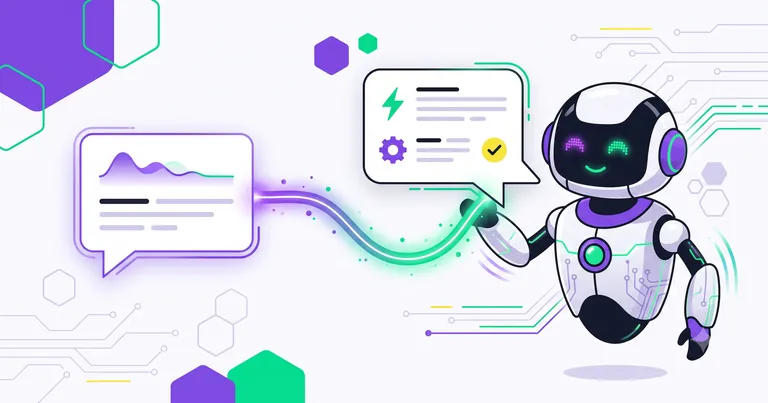
RAG solves this by providing that professional with a research assistant. When you ask a question, the system first retrieves relevant documents from your private database. It then hands these documents to the LLM with a specific instruction: "Answer the user's question using only the information in this text" (Generation).
It is essentially like allowing the AI model to take an open-book test.
RAG vs. Direct LLM vs. Fine-Tuning
Many technical managers confuse these approaches. Understanding the differences saves both time and budget:
- Direct use of an LLM: Great for general reasoning, copywriting, or summarizing generic texts. It is ineffective for retrieving specific facts about your operations because your private data simply isn't in its training set.
- Fine-Tuning: This is the process of retraining an AI model. It is used to change the behavior or tone of voice of the AI. It is expensive, time-consuming, and terrible for updating information frequently. If a price changes tomorrow, you do not want to have to retrain the entire model.
- RAG: Used to add knowledge. Data resides in an independent database. Did you update a PDF in your system? The RAG system uses the new version the very next second. It is faster, cheaper, and much more accurate.
Realistic use cases
RAG shines when you have a high volume of unstructured data and need quick, accurate answers:
- Internal Knowledge Base Search: Engineering or HR teams often lose hours searching for policies, legacy documentation, or onboarding manuals. A RAG system reads all PDFs, wikis, and documents, providing the exact answer alongside a link to the original source.
- Customer Support (Tier 1): Instead of a rigid, decision-tree-based chatbot that frustrates users, a RAG-powered bot consults your product manuals and ticket history to resolve issues in a contextualized manner.
The warning: don't use AI just for the hype
Appventura has been operating in the technology sector for ten years. Our main recommendation regarding Artificial Intelligence is: do not use AI just to be able to say your company has AI.
If a problem can be solved with a simple database search or a structured filter, keep it simple. We innovate where innovation solves a real problem, but architecture should always be focused on operational efficiency. RAG is a powerful tool, but it should be applied when the complexity of the search requires interpretation of context and natural language, not merely because it is a current trend.
How Appventura can help
If your company has a real bottleneck in customer service or difficulty extracting answers from internal knowledge bases, we can build the solution.
At Appventura, our AI and Automation service builds integrations with LLMs, semantic search, and RAG systems that run securely and are fully integrated into your existing infrastructure. We provide a clear technical roadmap and a team ready to execute. Speak with a specialist